Everyday European‑Style Crusty White Bread
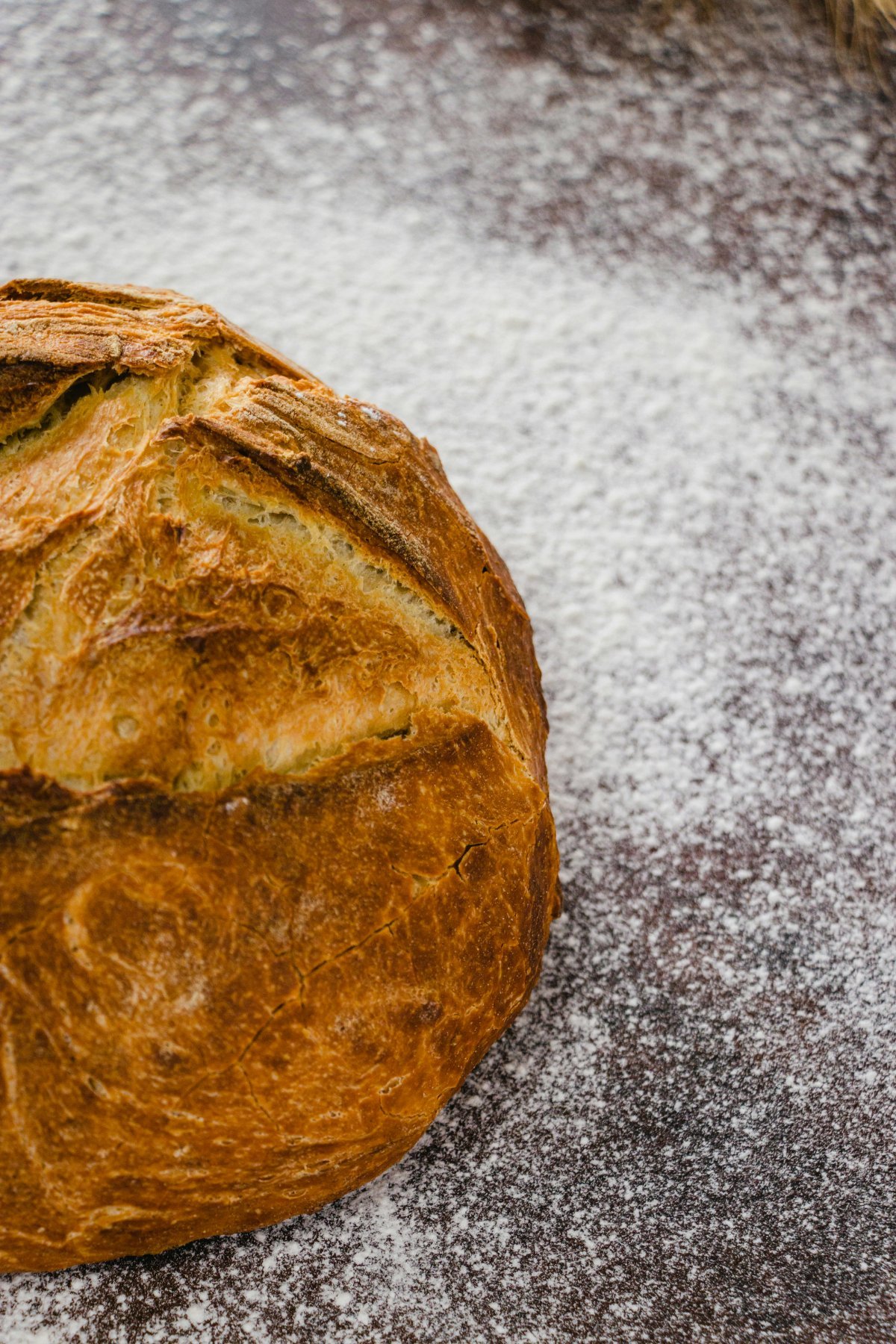
A reliable, full‑flavored white loaf with a crisp crust and tender interior. This dough comes together in a single day and is ideal for dinner, sandwiches, or toast.
Cook's notes
This dough uses a high hydration level, which creates an open crumb and crisp crust. High‑hydration dough is sticky — wet hands beat floured hands for handling. Warm water (90–95°F / 32–35°C) helps the yeast wake up quickly and shortens the rise time. Folding the dough during the first rise builds strength without kneading. A Dutch oven traps steam, giving the bread its signature crackly crust. For best flavor, allow the bread to cool before slicing.
Ingredients
- 500 g white flour(bread flour gives more structure; all‑purpose works with a slightly softer crumb.)
- 360 g water(90°F to 95°F — warmer water speeds fermentation; cooler water slows it down.)
- 11 g fine sea salt(enhances flavor and strengthens gluten)
- 2 g instant dried yeast(instant yeast mixes directly into the dough; no need to bloom)
Instructions
Autolyse
1In a large bowl, whisk the yeast and then salt into the warm water. Add the flour and mix until no dry spots remain. Cover and let the dough rest for 20–30 minutes.
Tip: This rest hydrates the flour and makes the dough easier to work with.
Folding
2With wet hands, lift one side of the dough in the bowl, stretch it upward, and fold it over onto itself. Rotate the bowl and repeat several times to build strength and surface tension. Cover the bowl and let the dough rise for 10 minutes.
Tip: Wetting your hands prevents sticking and makes folding itself.
- 3
Fold the dough with wet hands again after the 10-minute wait.
Tip: Folding builds strength without kneading; don’t skip it.
- 4
Fold one more time with wet hands in the next hour, once the dough has relaxed and spread. Then let it rest for at least an hour before shaping.
Shaping
5Prepare your work surface by lightly dusting it with flour or misting it with a little water to prevent sticking, then gently turn the dough out. Stretch the edges of the dough toward the center and tuck them in to form a loose round. Flip the dough so the smooth side faces up, then cup your hands around it and pull it toward you in small, gentle motions, rotating as you go, until the surface tightens and the dough forms a smooth, taut ball that holds its shape without tearing.
Tip: Handle the dough gently to preserve air bubbles.
Proofing
6Place the dough ball seam‑side up in a floured proofing basket. Let rise until tripled in size, about 4 hours, depending on room temperature.
Tip: A fully proofed dough should feel airy and jiggly when gently shaken.
Baking
7At least 45 minutes before baking, heat the oven to 475°F and place a Dutch oven inside to preheat.
- 8
Carefully invert the dough ball into a hot Dutch oven so the seam faces down. Score the dough with a sharp blade if a nice design is desired. Cover and bake for 30 minutes.
Tip: The pot will be extremely hot — use caution.
- 9
Remove the lid and continue baking for 20 minutes, or until the crust is a deep golden brown. Check at the 15‑minute mark to avoid over‑browning.
Tip: Check after 15 minutes to prevent over-browning. For a darker crust, leave the lid off for an extra 5 minutes.
Cooling
10Transfer the loaf to a cooling rack and let it rest for at least an hour before slicing.
Tip: Cooling the bread prevents gumminess and improves flavor.
Minsuri
Save this recipe — and start your family cookbook.
- Add any recipe — from a photo, a link, or your own voice
- Get guided help cooking with your kids and share your cookbook with family anywhere
- Get ideas for what to cook from what's already in your fridge
Already have an account? Sign in